Five cities, one arc
This is China's greatest hits – but done properly, not rushed. The arc runs north to south: Beijing for the capital's imperial sweep and the wild Great Wall; Xi'an for the Silk Road's terminus and one of history's most extraordinary archaeological discoveries; Zhangjiajie for the floating sandstone pillars that inspired Avatar's Hallelujah Mountains; Guilin and Yangshuo for the Li River karst scenery that appears on the 20-yuan note; and Hong Kong as a final-night counterpoint – one of the world's great city spectacles.
High-speed rail connects most of the legs, with one domestic flight into Zhangjiajie. Transit between cities is genuinely part of the experience – the bullet train from Beijing to Xi'an crests at 350km/h through the North China Plain; the overnight train south from Xi'an covers ground that would take days by road.
China requires more preparation than most destinations: a VPN downloaded before arrival, WeChat Pay linked to a foreign card for transport and payments, a DiDi account for taxis, and a visa secured weeks in advance. None of this is difficult, but all of it matters.
Best time to visit China
April–June is the best window: mild temperatures in Beijing (14–22°C), green forest in Zhangjiajie, and the Li River at good water level for boat tours. Golden Week (first week of May) is a major Chinese national holiday – domestic tourism spikes dramatically and prices surge. Avoid this window or book everything 3+ months in advance.
September–October is the second sweet spot: post-summer crowds, still-warm temperatures, and Zhangjiajie's forest beginning to turn. October's first week is again Golden Week – same caveat applies.
July–August is hot and humid throughout, particularly in Zhangjiajie (35°C+) and Guilin. Zhangjiajie's mist – which creates the Avatar effect – is also most likely in spring and autumn, not summer.
City by city
North to south in five stops – high-speed rail and one domestic flight between them.
Three nights is the right allocation for Beijing – enough to absorb the imperial core without rushing, and to make a full day of the Great Wall. The city is bigger and more modern than most first-time visitors expect, but the historic centre is extraordinarily concentrated: Tiananmen Square, the Forbidden City, Jingshan Park (for the rooftop view back over the palace), and the Nanluoguxiang hutong district all sit within walking distance of each other.
- Day 1: Forbidden City (book timed entry weeks ahead) → Jingshan Park hilltop view → Nanluoguxiang hutong for dinner
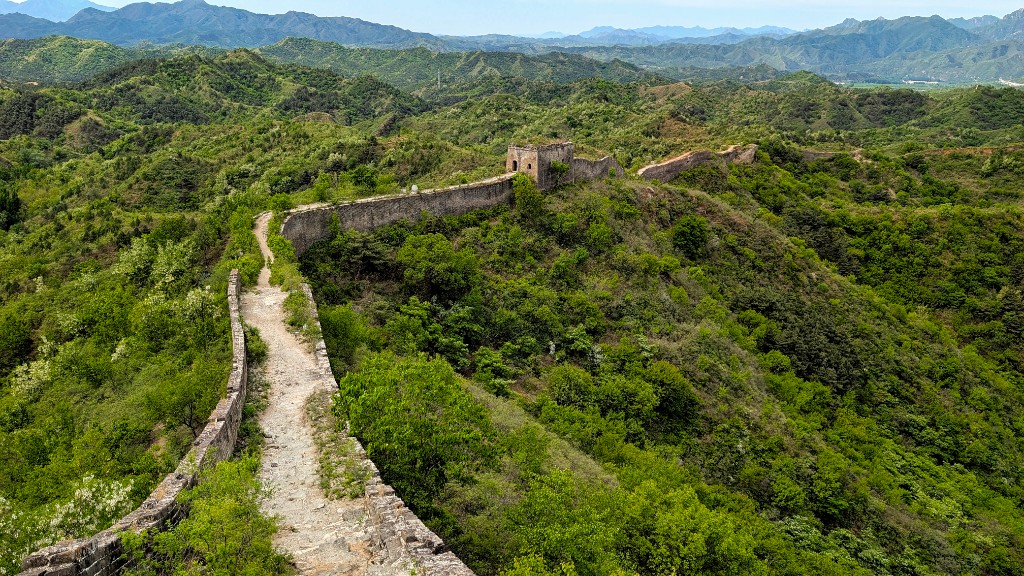
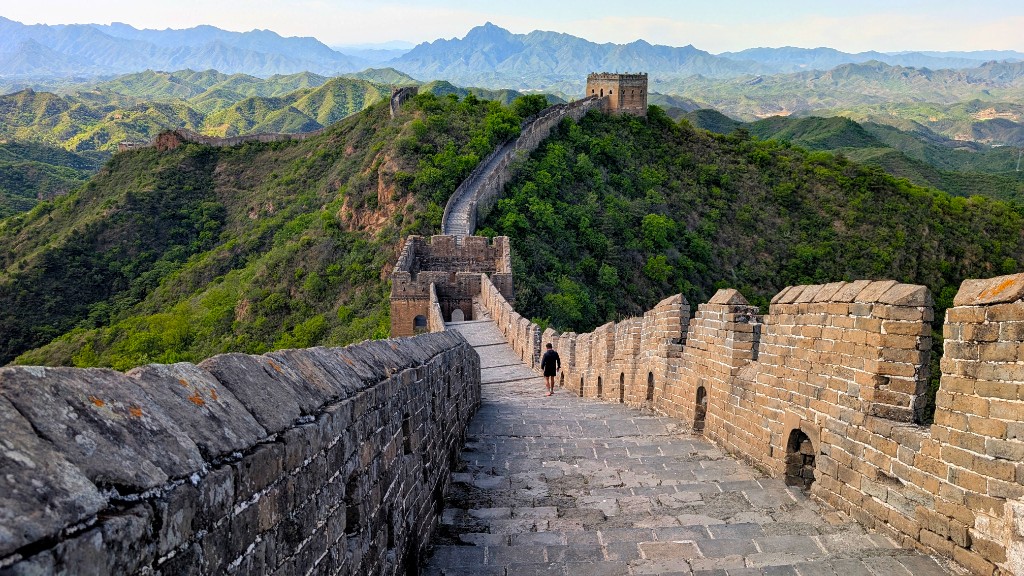
- Day 2: Gubeikou–Jinshanling Great Wall hike (see detail below)
- Day 3: Temple of Heaven morning → Summer Palace afternoon → Wangfujing evening
The finest Great Wall day hike from Beijing – the wild, unrestored Gubeikou section connects to the more dramatic Jinshanling, covering crumbling watchtowers, steep scrambles, and views that dwarf anything at Mutianyu or Badaling. The hike starts at Gubeikou's North Gate and follows the ridge east through 24-Window Tower, optionally detouring through Spider Valley (adds 3km and 1.5–2 hrs), then descends via Jinshanling's cable car. A genuine trail day – not a tourist walk.
Xi'an was China's capital for over a thousand years and the eastern terminus of the Silk Road. The Ming-dynasty city wall – one of the best-preserved in China – still rings the old city and can be cycled in about 2 hours at sunset. The Muslim Quarter's labyrinthine food alleys smell of cumin, lamb skewers, and pomegranate juice. And 90 minutes outside the city, an emperor buried his army underground for 2,200 years.
- Day 1: Arrive late morning · City Wall bicycle circuit at sunset · Muslim Quarter (Huimin Street) for dinner – biangbiang noodles, roujiamo, persimmon cake
- Day 2: Terracotta Warriors (Pit 1 is the main hall; Pit 3 for the command post; allow 3–4 hrs) → Shaanxi History Museum afternoon → Bell Tower square evening
Zhangjiajie National Forest Park is one of the most otherworldly landscapes on earth – more than 3,000 sandstone pillars rising 200m from the forest floor, draped in mist, with waterfalls threading between them. The Avatar production team spent weeks here before designing the floating Hallelujah Mountains of Pandora. Three nights gives you time to experience it properly: from the forest floor, from the ridge, and from the glass skywalk of Tianmen Mountain.
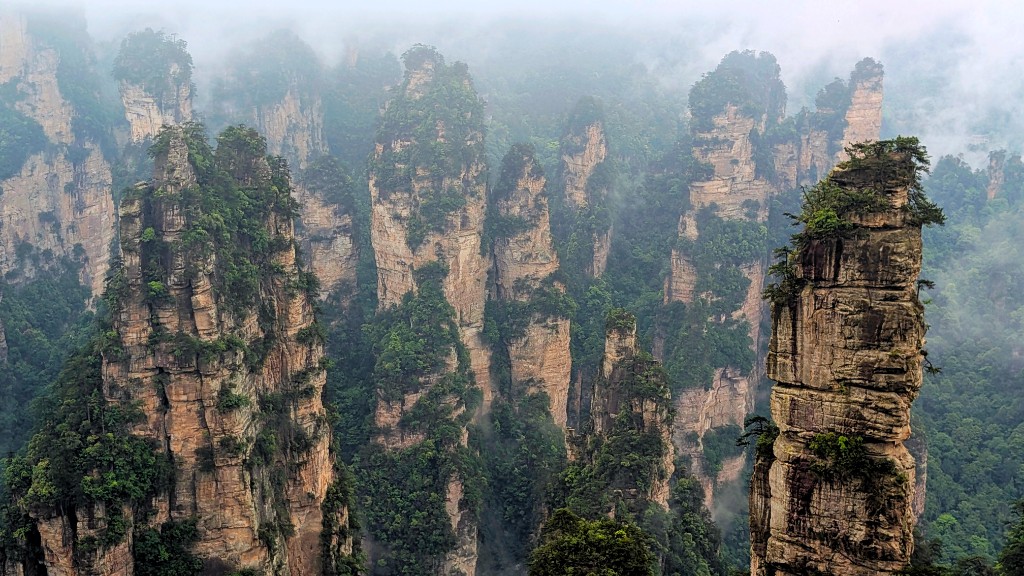
- Day 1: Arrive afternoon. Walk Golden Whip Stream at dusk (forest floor trail, 7.5km, flat – excellent for jet-lag legs and atmospheric light)
- Day 2: Take the Bailong Elevator (world's tallest outdoor lift, 326m) up the cliff face to Yuanjiajie plateau – arrive by 07:00 for mist before crowds. "Hallelujah Mountain" viewpoint. Tianzi Mountain cable car for the northern panorama.
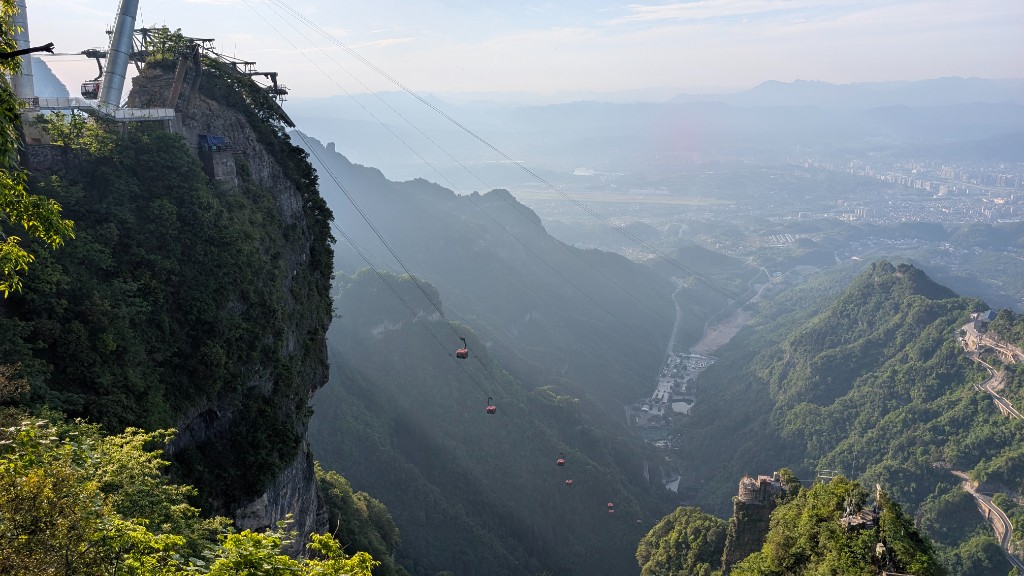
- Day 3: Tianmen Mountain – cable car (world's longest at 7.5km), glass skywalk along the cliff face, 99-hairpin bus road back down.
Mist is weather-dependent and utterly unpredictable. On a clear day the pillars are impressive but the Avatar effect disappears – you see the full scale of the geology, which is extraordinary in its own right, but it looks like a documentary rather than a dream. On a heavy mist day the park closes sections entirely for safety. The magic window is a light morning mist that burns off slowly – common in spring and autumn, rarer in summer. You may get it, you may not. Build three nights here partly as insurance: if you don't get mist on Day 2, you have another shot. Don't plan your emotional highlight around a single morning.
The Li River valley between Guilin and Yangshuo is China's most painted and photographed landscape – limestone karst peaks rising sheer from flat rice paddies, reflected in the river, ringed by bamboo. The four-hour boat cruise from Guilin to Yangshuo delivers the postcard views at river level. Yangshuo itself has evolved into a lively backpacker hub with excellent cycling routes, night markets, and the famous light show on Moon Hill.
- Day 1: Morning Li River cruise from Guilin to Yangshuo (~4 hrs, ¥210–498 depending on class). Arrive Yangshuo midday – hire a bicycle and ride to Moon Hill (3km, moderate climb, best afternoon light).
- Day 2: Yangshuo West Street market morning · Return to Guilin by bus (~1.5 hrs) · Elephant Trunk Hill (Guilin's most famous karst formation) · Zhengyang Pedestrian Street evening. Overnight train or early morning HSR to Hong Kong.
Hong Kong is the perfect finale – after the scale and antiquity of mainland China, the city's vertical density, harbour spectacle, and relentless energy is a genuinely exciting contrast. Two nights is enough to absorb the essentials: Victoria Peak at dusk, the Star Ferry crossing at night, a morning on Cheung Chau island, and dim sum at Tim Ho Wan. The MTR is one of the world's best metro systems – a Octopus card covers everything.
- Day 1: Arrive West Kowloon. Star Ferry from Tsim Sha Tsui to Central → Mid-levels Escalator → Victoria Peak at dusk (tram up, walk down via Lugard Road). Temple Street Night Market for dinner.
- Day 2: Cheung Chau Island ferry morning (45 min, HK$18 – fishing village, no cars, seafood lunch) → Return to Hong Kong, Mong Kok afternoon (Ladies Market, dim sum) → Harbour cruise or rooftop bar for the final night.
Getting between cities
China's high-speed rail network is genuinely extraordinary – the Beijing–Xi'an leg runs at 350km/h and is more comfortable than any equivalent flight once airport time is factored in. Book rail tickets on Trip.com (English interface, accepts foreign cards) or the 12306 app. For the Xi'an–Zhangjiajie flight, book at least 4–6 weeks ahead.
| Route | Mode | Duration | Approx. cost |
|---|---|---|---|
| Beijing → Xi'an | High-speed rail (G-series) | ~4.5 hrs | ¥550 / ~CA$150 |
| Xi'an → Zhangjiajie | Domestic flight | ~2 hrs | ¥600–900 / ~CA$164 |
| Zhangjiajie → Guilin | Train | ~4.5–5 hrs | ¥275 / ~CA$75 |
| Guilin → Hong Kong | High-speed rail | ~3 hrs | ¥400 / ~CA$109 |
| Total transit | ~¥1,825 / ~CA$498 |
What to know before you go
🔒 VPN & Apps
Download a VPN (ExpressVPN or NordVPN are reliable) before entering China – the App Store and most Western apps are blocked on Chinese networks. Once in China: WeChat for messaging and payments, DiDi for taxis, Trip.com for rail and flight bookings. WeChat Pay can now be linked to a foreign Visa/Mastercard.
🛂 Visa
Most nationalities require a Chinese visa applied for in advance at the nearest Chinese consulate or embassy. The process takes 4–7 business days. Note: Hong Kong is a separate SAR – most nationalities get 90 days visa-free at the border, regardless of China visa status. The mainland visa covers the full mainland itinerary.
💳 Money
WeChat Pay covers most purchases in cities – link a foreign Visa/Mastercard before arrival. Carry ¥1,000–2,000 in cash (100-yuan notes) for markets, Wall entrance fees, and any vendor that doesn't accept mobile payment. ATMs in major hotels reliably accept foreign cards. Hong Kong uses HKD – keep separate cash.
🚖 Getting Around Cities
DiDi (China's Uber) works across all five cities. Download before arrival and link a foreign card. Within cities, metro systems in Beijing, Xi'an, and Hong Kong are excellent and cheap. Zhangjiajie's national park uses internal shuttle buses – you cannot DiDi inside the park boundaries.
📱 Booking Rail Tickets
Use Trip.com (English, accepts foreign cards) for all train and flight bookings. The official 12306 app is Chinese-only and requires a Chinese mobile number. Book G-series trains 2–4 weeks ahead in peak season. Zhangjiajie flights book out fast – prioritise this leg first.
🌡 Zhangjiajie Weather
The park's mist is its defining feature – and it's most reliable in spring (April–May) and autumn (September–October). Summer is hot (35°C+) and the mist thins. Plan at least one early morning start (07:00 at Yuanjiajie) to maximise mist conditions. If you get clear days, the views are still extraordinary – just different.